If you have a snake encounter it is always critical to call upon
a professional Like Nature King Pest Management.
A one year warranty usually comes with our snake control treatment.
Call today! 214-827-0090
Water Snakes
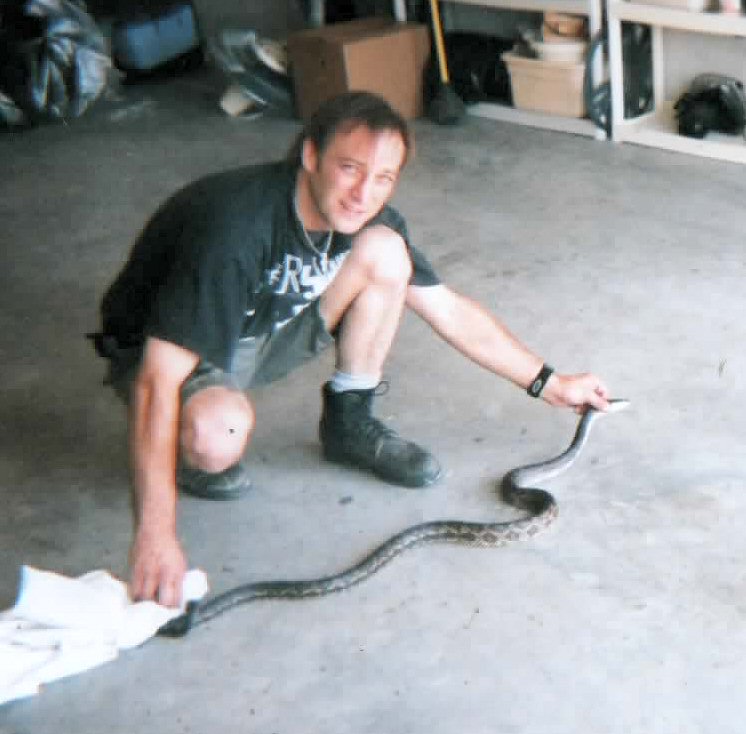 The Blotched-Water Snake (photo) If this snake can’t get from the danger it finds itself in, this reptile will flatten it’s head and neck and strike several times in succession. Yet most of its strikes are bluffs, and those that do connect ordinarily result in only a warning nip. This snake ranges in most parts of Texas and will move on into homes and live in the attic of a rodent infest structure. It does need water all of the time. Food source however for these types of snakes are usually fish, toads, frogs, skunks and geckos and They will eat rodents if that is the only nutritional support that they have at the time. They have dark-bordered pale bars that are generally dimly evident along the spine, while the belly is yellow, the larger of these reptiles have scale plates that are light colored brown along the edges. The anal plate is divided on this snake. These snakes are confused with the western cottonmouth snake all the time but, the round pupils and the more narrow head makes the identification easier. The western cottonmouth has a sizable dark heat-sensing pit between the eyes and nostril and an angular head whose flat, undercut cheeks abruptly intersect its crown. The cottonmouth has a rather thick body.
Yellowbelly Water Snake
The yellowbelly water snake occurs throughout East Central Texas, the typical yellowbelly is unmarked while the posterior edges of the belly scales are a lighter yellow. All water snakes have a similarity with each other. Sometimes it can be difficult to I.D. these guys on quick like basis because of the darkness of skin.
The Broad-Banded Water Snake however, is quite different then most water snakes. This guy can be identified easier and quick. It has a dappled yellow belly and is usually marked with large brown rectangular patches. Some of these snakes are very colorful and have bright red and yellow patterns on them. Believe it or not, the female can have up to 50 live bearing young but most are about 15. It likes to inhabit areas of water that do not have swift currents and they are most active at night. Their diet is like other water snakes but they do have a sweet tooth for crawfish. So crawfish holes in high water table lands might have a broad-banded or two.
Broad-Banded Copperhead (Southern)
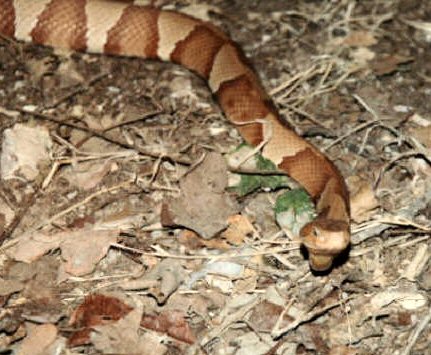 Venomous. Often very common in areas of ideal habitat, typically light to moderate ground cover under a leafy sylvan canopy-including wooded suburban residential areas. Prime deciduous forest-meadow may support as many as 7 snakes per acre. These snakes are live-bearing and the mating period is both late fall and early spring. Then she goes into her winter retirement. The young can be born during the latter part of July all the way through September. Four to eight neonates are 7-1/2 to 10 inches long and generally have paler dorsal pigmentation than their parent. There are various other snakes that do resemble copperheads so if there is a snake sighting or any inclination that there might be one please call Nature King Pest Management. for professional assistance. Pictured below is a Broad-Banded Copperhead that was photographed in the back yard of their house. When this type of snake is in the back yard its time to perform some means of snake control and prevention.
Water Moccasin
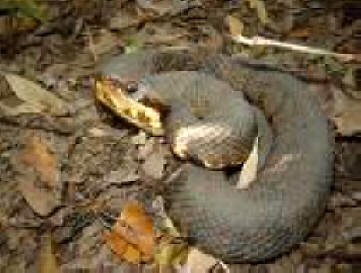 Despite the cottonmouth’s formidable reputation, comparatively few people are bitten. Only about 7 percent of Texas’ snake bites involve the cottonmouth, while throughout the United States the mortality rate is less than one person per year. Though rarely fatal, is often serious in terms of tissue death, for while it’s toxins have far less lethal potency than those of the western diamondback rattlesnakes, their destructiveness toward blood cells and plasma is nearly 9 percent greater than those of the diamondback. Frogs are this viper’s most frequent prey in most locales, but they are an indiscriminate feeder whose diet alters with the availability of different vertebrate prey, including fish, mammals as large as the young of muskrats and cottontails, water birds, and sizable water snakes, as well a copperheads and smaller cottonmouths. These snakes are live-bearing and have from 3 to 12 young (the average is about 5). The length is from 71/2 to 11 inches.. The coloring of the cottonmouth is dark and the body sometimes seems large in the middle but that is normal for this snake. The cottonmouth is a water snake and has been confused with all types of water snakes. If you have a snake encounter it is always critical to call upon a professional Like Nature King Pest Management.
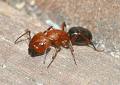 Carpenter Ants are large ants that destroy wood but do not eat the protein substance derived from wood particles like termites do. However, they are classified as a wood destroying insect.
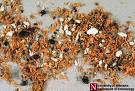 The most common in North Texas is the Red and Black Texas Carpenter ant. The only external indication of infestation other than of workers and/or swarmers is the appearance of small openings or windows on the surface of the wood. Through these, the workers expel debris which consist of saw-dust like material or shavings and/or fragments of insulation and dead ant body parts. This is the result of enlarging a void cavity in order to move the queen and/or queens in and to also make room for the care of brood.